India’s Fine Fragrance Market: The Shift Toward Premium and Personalized Scents (July 2025 - Dec 2025)
Jan 05, 2026
As Indian consumers continue to embrace fragrance as a form of self-expression rather than a functional add-on, the fine fragrance market is set to become one of the most dynamic and premium-driven segments within beauty and personal care, with fine fragrance brands playing a central role in shaping aspiration and category growth.
The Indian Fine Fragrance Market
- India’s fine fragrance market is undergoing a notable shift from a largely functional category to one driven by emotion, identity, and lifestyle expression.
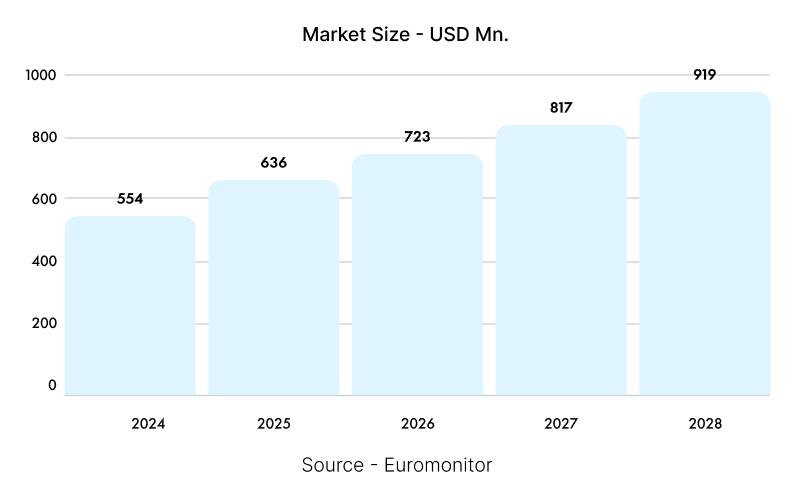
- The market is projected to grow from USD 554 million in 2024 to USD 919 million by 2028, registering a strong CAGR of ~13.4%. [1]
- This growth highlights fragrance’s evolution into a key pillar of the BPC ecosystem, supported by increased innovation and premiumization among fine fragrance brands.
Market Growth Drivers
Increasing disposable incomes, especially among urban and aspirational consumers, have expanded willingness to spend on premium and experiential products, directly benefiting premium and masstige fine fragrance brands.
Fragrances are no longer viewed as occasional indulgences; instead, they are becoming everyday lifestyle essentials, aligned with grooming routines, social occasions, and personal branding.
The growing consumer appetite for premium and personalized scents has encouraged experimentation with niche, luxury, and artisanal offerings from fine fragrance brands, accelerating category premiumization and sustaining overall market momentum.
Fine Fragrance Sales by Category
Mass Fragrances: Volume-Led, Everyday Essentials
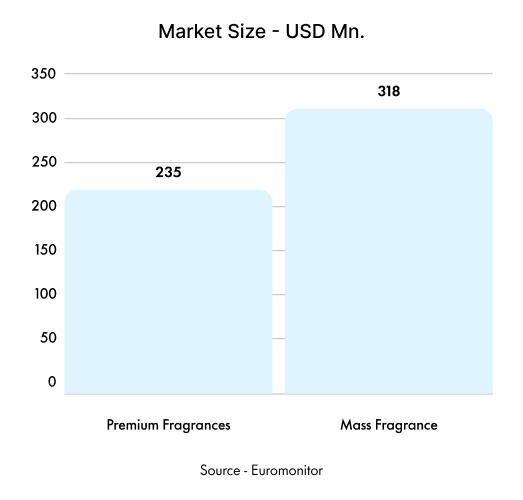
The mass fragrance segment leads the market at USD 318 million, driven by affordability, wide reach, and high daily-use demand. These offerings remain especially relevant in Tier 2 and Tier 3 cities, where access-driven fine fragrance brands are expanding penetration among first-time users.[1]
Premium Fragrances: Smaller Base, Faster Growth
The premium fragrance segment, valued at USD 235 million, is growing rapidly as consumers experiment with layering, niche scent profiles, and curated fragrance wardrobes. Growth is being fueled by premium fine fragrance brands leveraging limited editions, ingredient-led storytelling, and aspirational positioning.[1]
AARAV’s Fine Fragranced Outlook 2025-26
Develop differentiated fragrance strategies for mass and premium segments. While mass fragrances should prioritize familiarity, longevity, and affordability, premium fine fragrance brands can focus on complexity, storytelling, and distinctive ingredient signatures.
Smaller pack sizes, discovery sets, and travel sprays can lower entry barriers and encourage consumers to explore new scent profiles and fine fragrance brands without high upfront commitment.
While global fragrance trends influence aspiration, adapting them to Indian preferences—such as climate suitability and cultural scent associations—will allow fine fragrance brands to improve relevance, adoption, and long-term loyalty.
FAQs
FAQ 1: Why is India’s fine fragrance market growing so rapidly?
India’s fine fragrance market is expanding due to rising disposable incomes, increasing urbanization, and a growing shift toward fragrance as a form of self-expression. Consumers are moving beyond functional use and embracing curated scent wardrobes, niche offerings, and premium experiences. This transformation is also encouraging innovation from brands and every major fragrance oil manufacturer operating in the country.
FAQ 2: What is driving the premiumization trend in fragrances?
Premiumization is fueled by consumers seeking exclusivity, long-lasting formulations, and storytelling around ingredients. Limited editions, artisanal blends, and unique fragrance ingredient combinations are attracting buyers who want differentiation. As awareness grows, premium fragrances are no longer luxury splurges but part of everyday identity building.
FAQ 3: How are mass fragrances different from premium fragrances in India?
Mass fragrances focus on affordability, familiarity, and high-volume daily use, especially in Tier 2 and Tier 3 cities. Premium fragrances, on the other hand, emphasize craftsmanship, complex notes, and personalization. Many brands collaborate with specialized fragrance oil wholesalers to maintain consistency and scalability across both segments.
FAQ 4: How do brands make a fragrance suitable for Indian climates?
To make a fragrance suitable for India, perfumers consider heat, humidity, and cultural preferences. Stronger base notes, higher oil concentration, and regionally preferred accords such as oud, sandalwood, and florals help improve performance and consumer acceptance.
FAQ 5: What does it take to create your own scent professionally?
To create your own scent at a professional level, brands collaborate with perfumers and a trusted fragrance oil manufacturer to ensure stability, compliance, and longevity. The process includes ideation, formulation trials, testing for climate suitability, and packaging alignment with brand identity.
FAQ 6: What role do fragrance oil wholesalers play in the market?
Fragrance oil wholesalers play a crucial role in supplying consistent, scalable raw materials to both mass and premium brands. They enable smaller labels and emerging entrepreneurs to experiment, innovate, and even explore making your own fragrance concepts without large-scale manufacturing investments.
Sources :
[1] Euromonitor Login. (n.d.-b). https://staging-login.euromonitor.com/